Tips for Success
- Use the Right Cut of Beef: Chuck roast is ideal for stews because it becomes tender when slow-cooked. Avoid lean cuts like sirloin, which can dry out.
- Don’t Rush the Browning: Searing the beef properly adds a deep, caramelized flavor to the stew.
- Cook Low and Slow: Allow enough time for the beef and vegetables to become melt-in-your-mouth tender.
- Balance the Flavors: Wine, tomato paste, and fresh herbs enhance the broth, while a splash of vinegar or Worcestershire sauce can brighten the dish at the end.
- Thicken the Stew: For a thicker broth, remove 1 cup of the liquid, mix it with 1 tablespoon of cornstarch, and stir it back into the stew.
Variations
- Guinness Beef Stew: Replace the red wine with dark stout beer for a hearty, malty flavor.
- Spicy Beef Stew: Add chili flakes or cayenne pepper for a kick.
- Vegetable Stew: Add parsnips, turnips, or mushrooms for more variety.
- Slow Cooker Method: Brown the beef and sauté the vegetables, then transfer everything to a slow cooker. Cook on low for 6-8 hours.
Why Beef Stew Is a Classic Comfort Food
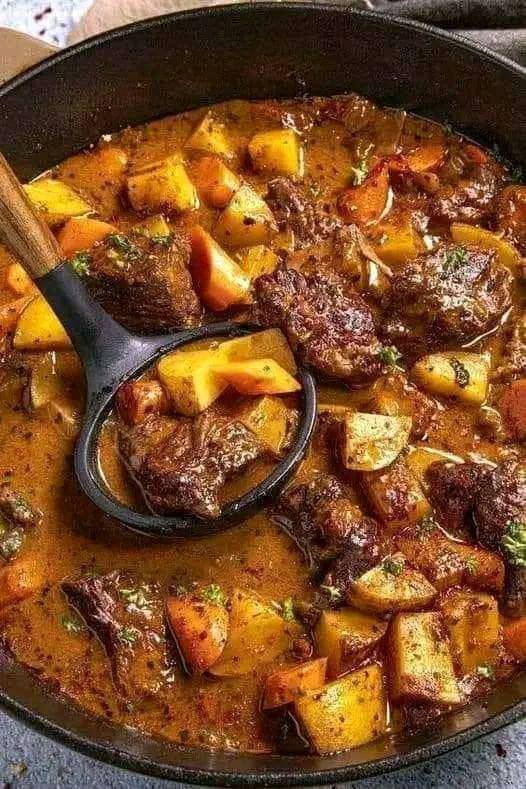
Beef stew holds a special place in the hearts of food lovers worldwide. It’s not just a meal; it’s an experience that evokes nostalgia and warmth. The slow cooking process allows simple ingredients to transform into a complex, flavorful dish. Whether served on a cold winter evening or as part of a family gathering, beef stew has a way of bringing people together.